Hi, I'm Tayfun!

About Me

About me

Hi, As a software development student at Gilde Roermond, I mainly work with PHP and JavaScript. PHP allows me to build dynamic web applications and retrieve data from databases, while JavaScript allows me to add interactive elements and dynamic content to my projects. My experience with these languages grows with every project I tackle, and I'm always looking for new ways to improve my skills and learn more about the possibilities they bring to software development.

React Js

PHP

Python

Javascript

Html

Mysql

Java

C#

Css

Wordpress

Go to My Projects

My Experience

Year 1

In my first year, I started the Software Developer program at MBO level 4. Prior to this, I had no experience with coding, so everything was entirely new to me. The first half of the year was a combined class of Software Development and ICT Management, focusing mainly on theory, including HTML and CSS. In the second half, I was introduced to PHP and tasked with creating a time tracking system where different roles had to be assigned to the appropriate users. This was quite a challenging project for me at the time, as I had zero prior experience.

Year 2 (First half)

In my second year, we were introduced to a new programming language: C#. Our main project was to develop a point-of-sale (POS) system for a restaurant. We were divided into groups, which required us to learn how to collaborate effectively. We used tools like Trello for project management and held daily stand-ups to stay aligned. Each team member had their own responsibilities, and my role was to develop the POS system itself.

I had to ensure that customers could make payments, employees' details could be accessed, working hours were visible, inventory management was integrated, and notifications from tables were received and displayed. It was a fun and engaging project, but it also taught me the importance of teamwork, as everything had to work seamlessly together. In the end, we delivered the project and presented it to the restaurant, and they were impressed with our work.

Year 2 (Second Half)

In the second half of my second year, we started our internships. I interned at IBI², an organization that integrates biomimicry—drawing inspiration from nature—to create sustainable solutions for sectors like agriculture, construction, and transportation. They focus on holistic approaches, such as the Blue Economy, which promotes eco-friendly business models and technologies that turn scarcity into abundance while respecting natural ecosystems. IBI² offers services like sustainability assessments (QuickScans) and runs the Futures Academy, where participants learn about sustainability, biomimicry, and building resilient business models. This was my first internship, and to be honest, it wasn’t the best experience. As second-year students, we were given assignments that were too advanced for our skill level. Additionally, our internship supervisor often hinted that our internship could be rejected if we expressed doubts about successfully completing the tasks.

Our main task was to develop an improved version of their QuickScan tool, making it faster and more efficient. The tool I created during my internship helps companies evaluate their performance on the Sustainable Development Goals (SDGs). IBI² uses this tool to generate reports for businesses and provide recommendations on how they can align with the SDG standards set by the EU. The tool allows users to create reports, review previous ones, and print outputs. Despite the challenges, completing this project was a valuable learning experience.

Year 3 (First half)

In my third year, we had a significant workload compared to the previous years. One of the highlights was learning Python from one of our instructors, followed by a project where we had to display real-time weather, traffic, train schedules, and news updates on a TV screen. My specific task was to showcase the weather using an API. I initially started working on this in JavaScript, and it was a challenging project because it relied heavily on the data provided by the API. My goal was to display the weather for the entire week, with a new day being added daily and staying up to date. However, the first API I used could only show the weather for the current day, which didn’t meet my expectations. After some searching, I found another API that provided the required data, and I was able to achieve my goal.

Unfortunately, teamwork during this project was not ideal. Out of the blue, the team decided to switch to React, which meant I had to rewrite the entire weather API functionality in React. This was challenging at first since React was new to me. However, I quickly adapted, and in the end, we managed to create a functional and polished app.

Year 3 (Second Half)

The second half of the school year was focused on preparing for our exams. My project group consisted of friends, which had its pros and cons. While working on one of the projects, one team member was unable to deliver their part on time. As a result, I had to step in and complete their portion last-minute to ensure that we still had a functioning project to present. The assignment involved creating a system for reserving rooms or offices. In a short amount of time, I managed to develop the majority of the project. I implemented features such as:

Different user roles (e.g., admin, staff).

A secure login system with hashed passwords.

Separate pages for admin and staff members.

Functionality to create, edit, and delete rooms,companies, contacts, and employees.

A dashboard to view active and inactive rooms, including detailed descriptions such as the number of tables, seating capacity, available TVs, and other details.

We were a team of three, but I ended up doing more than half of the work. Despite the challenges, I made sure we delivered a complete and functional system.

Year 3 (Second Half)

During the final part of year 3, we were given additional assignments and participated in a special program at Zuyd University of Applied Sciences. This program was designed to shorten the duration of studies for those who planned to continue their education there. As part of this program, we completed several assignments, such as creating a "Hangman" game. I added an extra feature where a player could play solo and receive random words from an API. Although I successfully completed the program and earned the option for a shortened curriculum at Zuyd, I ultimately decided not to pursue it.

When exam season arrived, we were tasked with completing a major project over one week. The process was as follows: Day 1: We started by analyzing a provided text to extract user stories, acceptance criteria, and the project goal. Day 2: This day focused on designing sketches and creating an Entity Relationship Diagram (ERD) for the database. I also prepared a use case diagram, an activity diagram, and outlined the coding conventions. Our team ensured that the sketches, database design, and code conventions aligned well. Day 3–5: Coding began on the third day, and we received the finalized database and user stories from the instructors. There were three levels of difficulty (A, B, and C), and I was given the hardest version (confirmed by the instructor).

Exam Project Details The project revolved around a scheduling and resource management system for a driving school. These were the user stories I worked on: Login System: Implemented a secure system for logging in.

Car Management: Allowed the owner to add, edit, and delete cars to manage the fleet.

Time Block Management: Enabled the owner to add time blocks for scheduling lessons and planning instructor availability.

Resource Allocation: Developed functionality to assign time blocks to instructors and cars for lesson scheduling and resource management.

Usage Monitoring: Created a feature to provide an overview of car usage within a specific period.

Instructor Availability Overview: Tasked with displaying a daily and weekly summary of instructor availability (busy/available/unavailable).

Unfortunately, due to time constraints, I couldn't complete this feature. Despite the tight deadline, I completed all the tasks except the last one. The final project was submitted and presented successfully. A week later, I received the news that I had passed the exam. This was a challenging but rewarding experience, and I was proud of what I achieved in such a short timeframe.

Year 3 (Second Half)

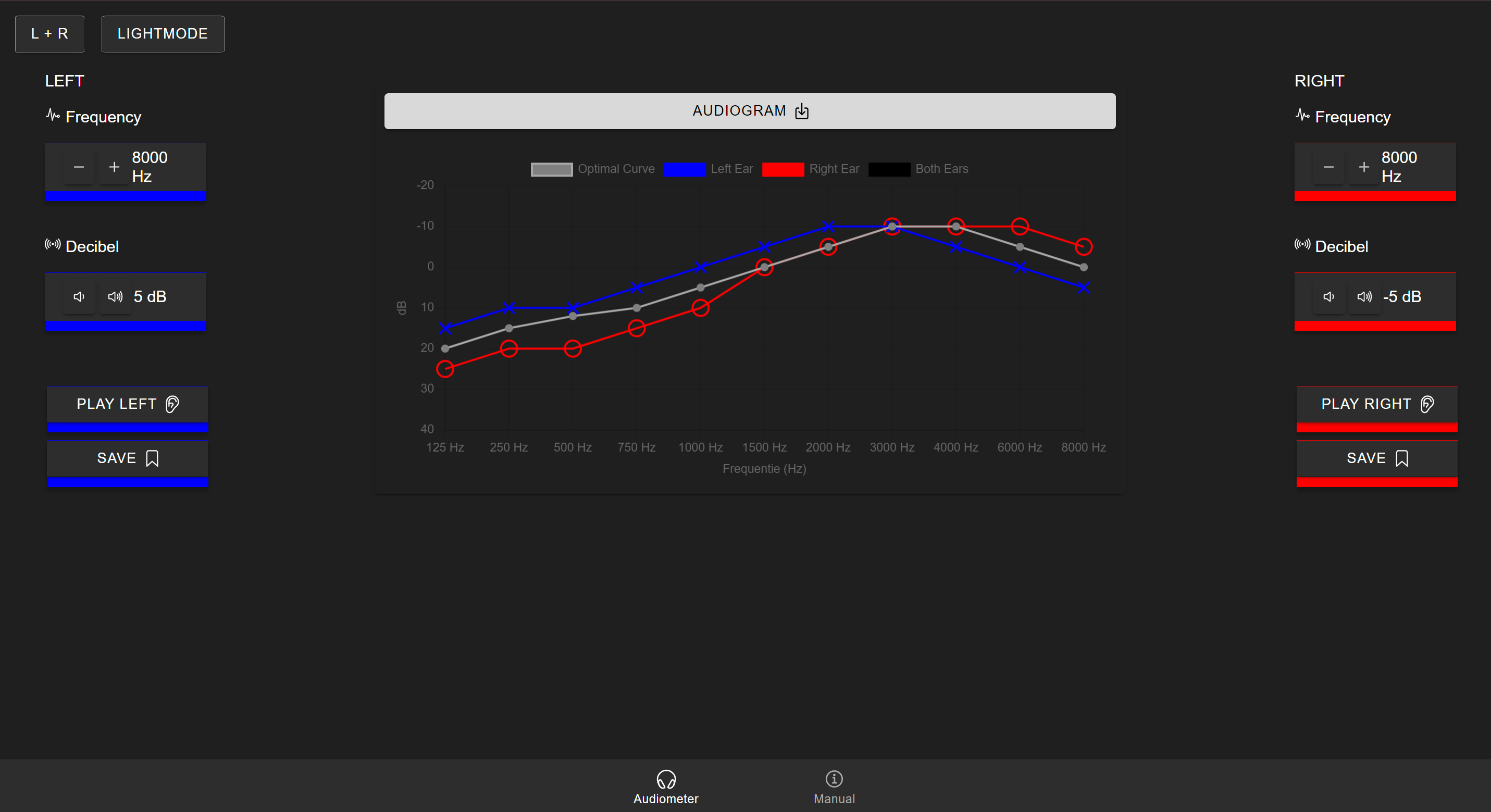
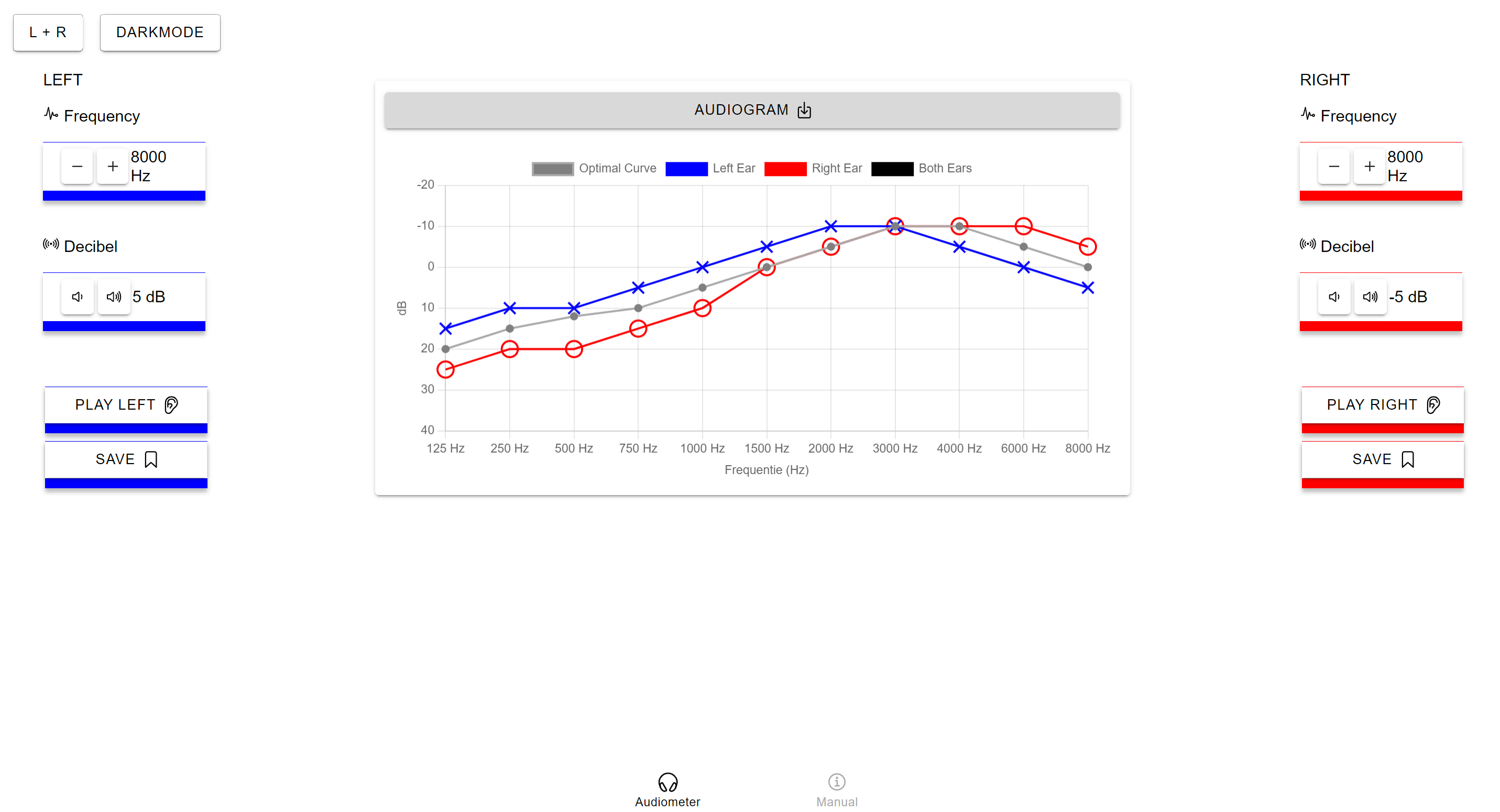
This was not the end of the school year, as we still had two more assignments to complete. One of the assignments allowed us to choose from three different projects, and we decided to work on the audiometer. This project was developed for a client seeking a tool to assess individuals' hearing capabilities. The audiometer allows users to play beep sounds at various frequencies and volumes to evaluate hearing, primarily targeting children. The results are displayed in a detailed graph, enabling the client to create customized music that supports optimal auditory development for each individual.

We were also required to complete a final project, with the condition that it had to be innovative. This meant using a programming language that we had rarely or never used before, along with a database. I chose to work with JavaScript and a MySQL database. For my project, I decided to create a 2D fighting game with different characters. These characters were based on my friends, with their faces incorporated into the game. It was an enjoyable project where players could pick up power-ups, view a health bar, and enjoy music and sound effects. Additionally, the database tracked the win condition. This marked the end of my third school year.

Year 4

In the fourth year, I only worked during the first half of the year, after which I would be done. This year, we had to go on an internship. During the internship, I had to attend the Fontys University of Applied Sciences in Venlo every Wednesday for a program related to an accelerated academic year. As a result, sometimes I was overwhelmed with a heavy workload, but you can’t keep throwing sixes all the time.

I did my internship at Aandachttrekkers in Oostrum. Based in Oostrum, it is a dynamic full-service agency specializing in creative advertising and sign production. Their expertise spans three core areas: concept & design, digital communication, and advertising production. They offer services such as logo and house style design, website development, vehicle and building signage, digital signage, and print materials like banners, posters, and exhibition displays.

In the first few weeks, I mainly worked with Prodiz Memoria, where I had to fix a few bugs and didn’t have much else to do. Prodiz Memoria is a service that allows users to create personalized video tributes for funeral services. It makes it easy to collect media such as photos, videos, and music through a user-friendly platform that can be accessed from both computers and mobile devices. The service automatically synchronizes the media with accompanying music, simplifying the process of crafting a meaningful and unique presentation for a funeral ceremony.

Afterward, I received my first real assignment, which was to help with the development of a new website for Aandachttrekkers using WordPress and Slider Revolution. However, I quickly realized that this style of work wasn’t my preference. I communicated this to the owner, but of course, I continued with WordPress because I never give up. He also informed me that there would be tasks I might not find interesting, but they still had to be completed. I told him I preferred working with plain code rather than CMS. A few weeks later, I received a new assignment: the orifice calculator.

The orifice calculator assists in selecting the optimal orifice size and material to ensure precise and efficient cutting. It helps maximize tool lifespan and minimize downtime. These orifices are widely used in industries such as aerospace, medical device manufacturing, and custom fabrication. Additionally, DD Technologies offers diamond orifices that are globally recognized by leading OEMs for their durability and superior performance. The calculator was a huge success at the trade show, as the company mentioned. It was such a success that the owner requested an expansion because there was significant demand to adjust the currency. I was excited to hear that the owner was impressed with my work on the calculator, and I received praise from my business owner.
My Projects

BestplugNL

On this dutch clothing website you can view and explore an extensive collection of clothing items. If you are interested in a specific item, you can easily place an order by simply calling the telephone number provided. This offers a personal and direct way to order your favorite clothing. With a focus on telephone orders, we strive to provide a personalized shopping experience that meets the needs of our customers. (Its for mobile and only by the page clothes can you click on shoes)

See Project

SDG Scantool

This is a tool i created on my internschip at IBI2-Institute for sustainable transitions & biomimicry innovations. This tool is designed to help companies to see how they are doing on the SDG's. IBI2 uses this tool to make reports for companies and gives them advise on how they could improve to the SDG standart of the EU. In this tool you can create reports, see previous ones and print the output. (you cant login.)

See Project

Orifice Calculator

The calculator assists in selecting the optimal orifice size and material to ensure precise and efficient cutting. This helps maximize tool lifespan and minimize downtime. These orifices are widely used in industries such as aerospace, medical device manufacturing, and custom fabrication. Additionally, DD Technologies offers diamond orifices that are globally recognized by leading OEMs for their durability and superior performance.

See Project

Audiometer

This project was developed for a client seeking a tool to assess individuals' hearing capabilities. The Audiometer allows users to play beep sounds at various frequencies and volumes to evaluate hearing, primarily targeting children. The results are displayed in a comprehensive graph, enabling the client to create customized music that supports optimal auditory development for each individual.

See Project

Contact Me

Facebook
Mail
Instagram
GitHub
LinkedIn